Evolved emergency medicine · residency didactics
Choose the patients. Choose the time.
Every team on one live virtual board.
Running The Board is a live, multi-patient emergency department simulation. A team leader runs the digital console with the patients from a dynamic, interactive script while learners run the board. Every team plays the same board at once, scores in real time, and anyone can watch the projected virtual cases and scoreboard play out. Debrief at the end and get the case pearls emailed to you.
What it is
The department, as a game the whole room can see.
The cases
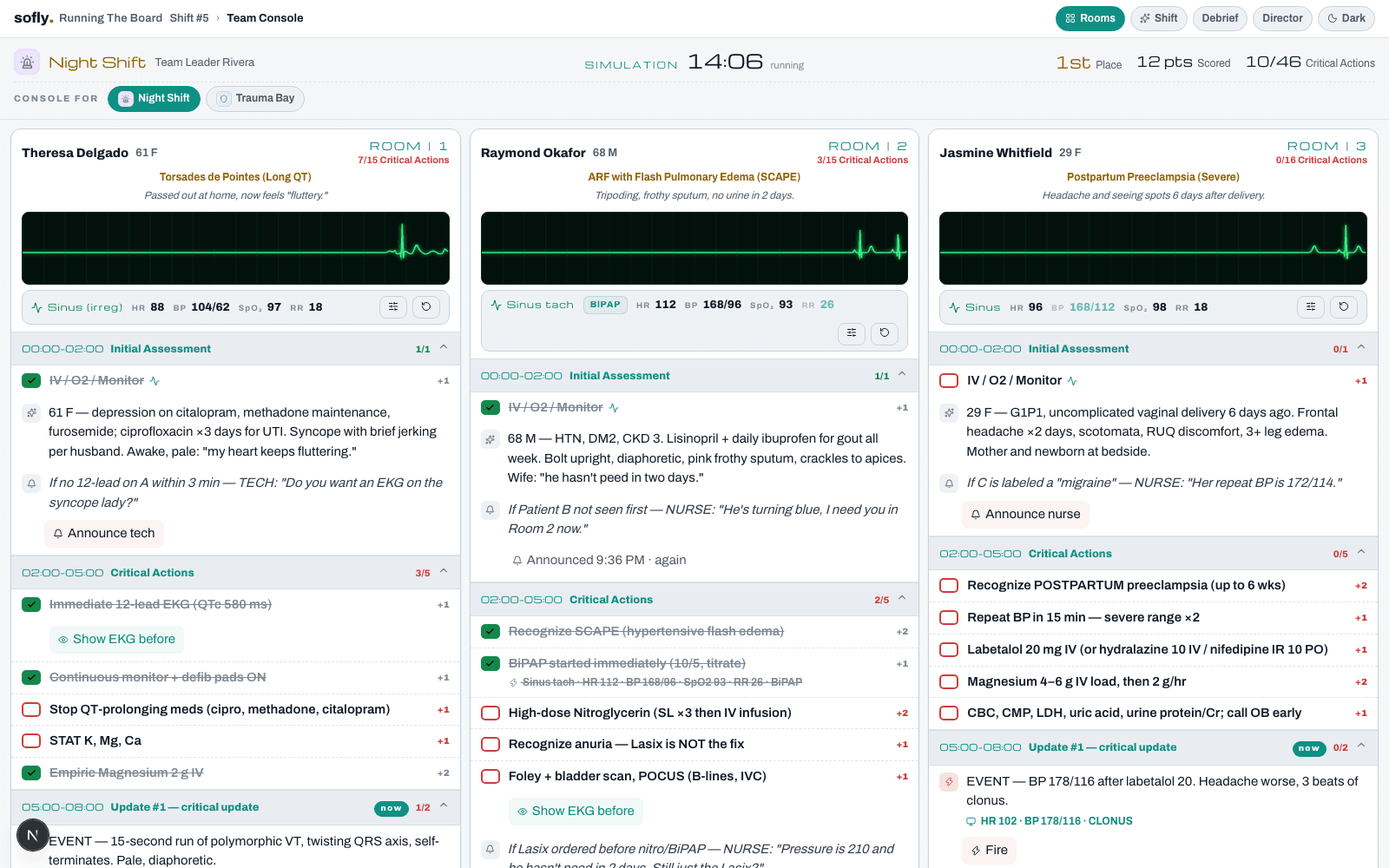
Each patient is a timed script: a presentation, blue prompts to think about, red critical actions that score, nurse and consultant interruptions, and deteriorations that change the monitor when a team lets them happen. Cases are written once and run on any session.
The teams
A team leader runs each team from a console on an iPad or laptop. They check the critical actions their team secures, fire the deteriorations the script calls for, and announce the nurse who is asking why nobody has seen Room 2.
The board
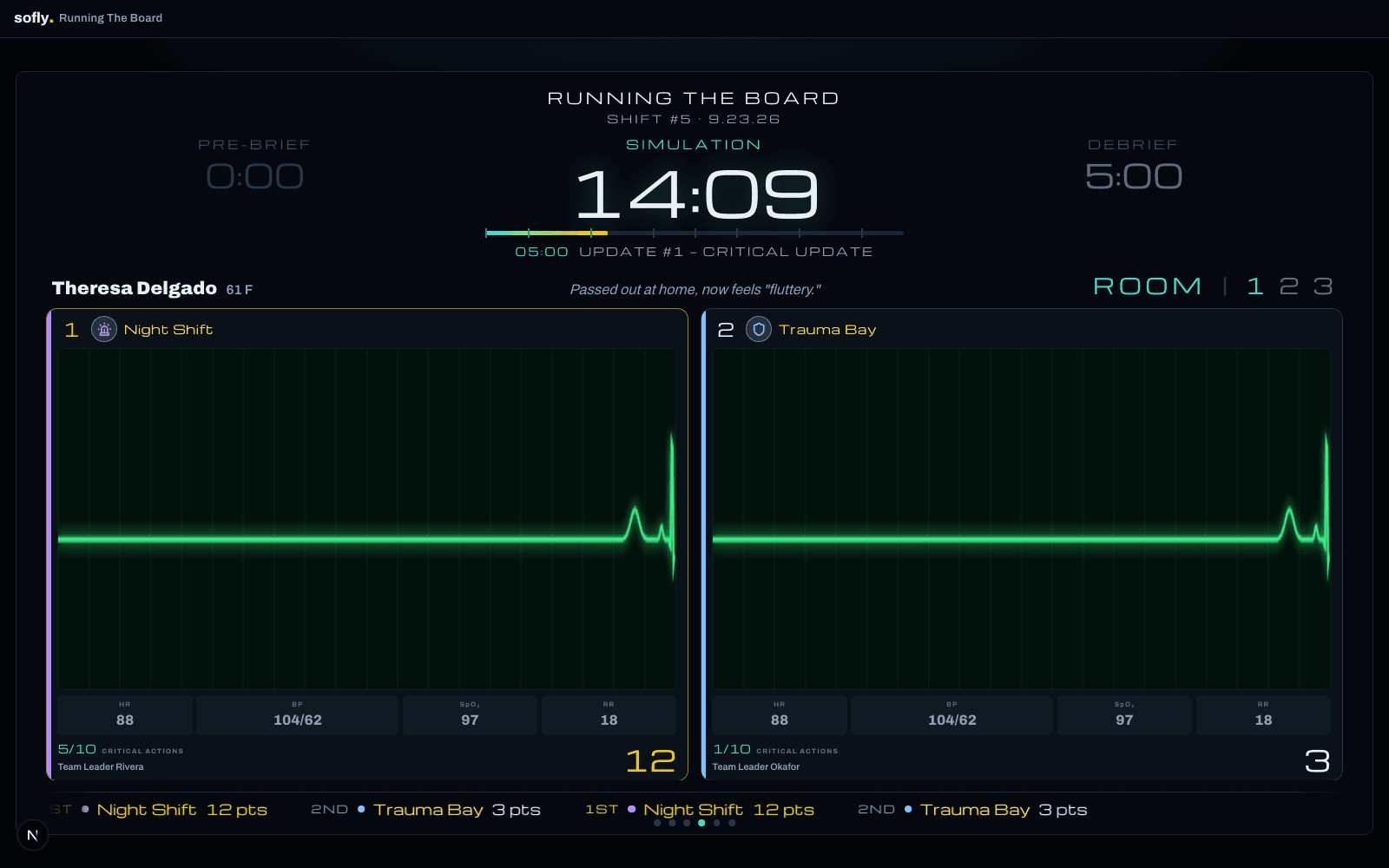
The projector shows every team’s copy of the room at once: monitors, vitals, a flag when a patient turns, the standings as they move. Scored actions show as a category word, never the answer, so the board never leads.
How a session runs
You choose the time over three phases.
- Pre-brief
Read the room in
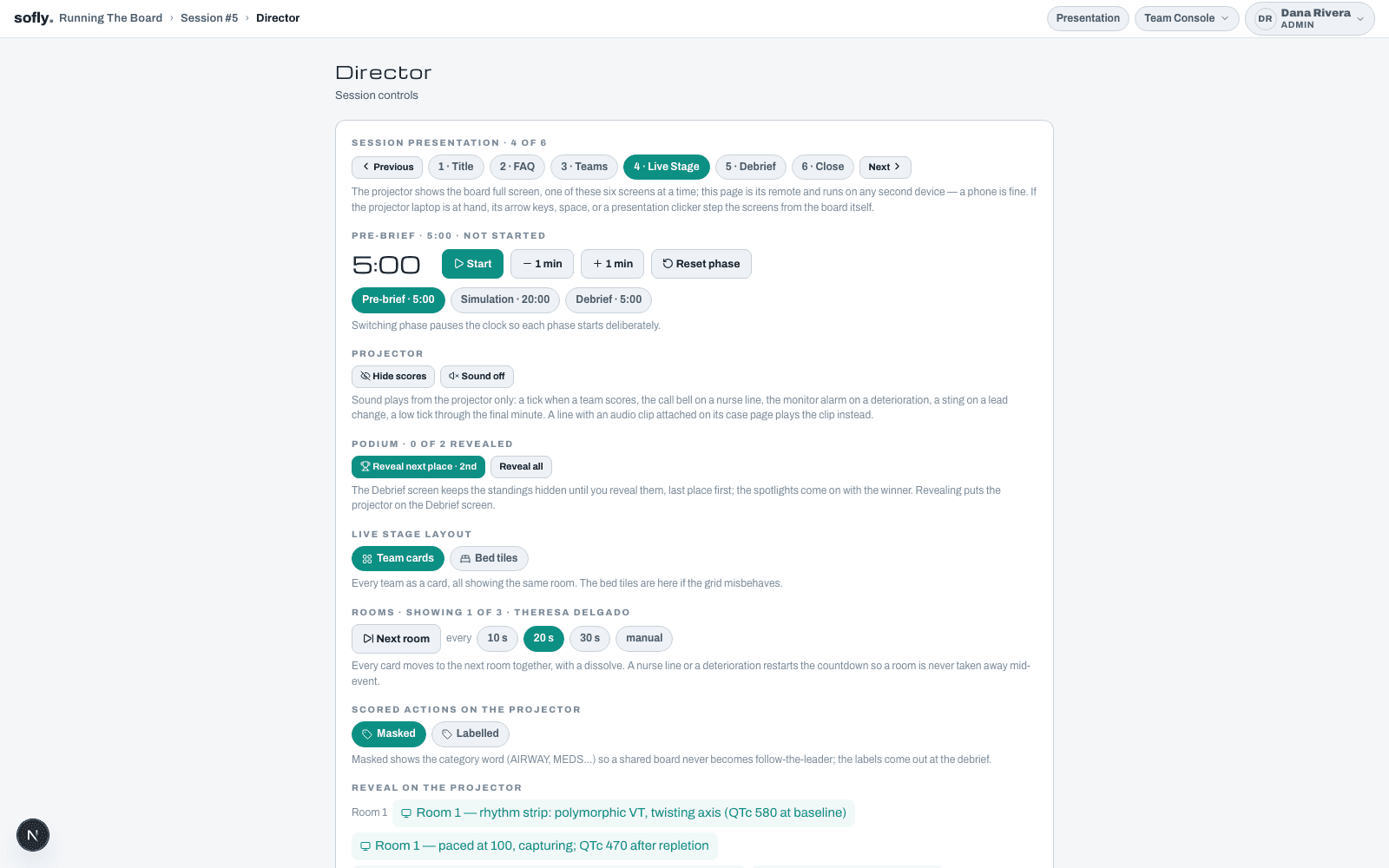
The room reads the presentations and the teams are named on the board. Long enough to set the scene, as long as you want it.
- Simulation
Every team at once
Every team runs the board at the same time. The clock, the monitors and the standings are live on the projector; the room hears the call bell and the alarms. You set the length before you start.
- Debrief
Reveal and take home
The podium reveals from last place up. The core actions no team secured are named, because they are about the case. Learners scan a code and the Pearls arrive by email.
The screens
Each session viewed by three surfaces.
What it isn’t
Not a mannequin
Nothing is examined and nothing is intubated. It trains the part of emergency medicine that happens at the trackboard: who first, what now, who to call.
Not an exam
Scores exist to make the room care and the debrief land. They are not recorded against a resident and they do not leave the program.
Not patient data
Every patient is authored. Names, vitals and rhythms are written for teaching and describe no real person.